
Facebook and Instagram ads for healthcare practices
Meta campaigns that reach people near your practice before they search, written for Meta health rules, with lead forms and calls tracked to the booked visit.
- 3,200+ practices
- Google Premier Partner
- For doctors, by doctors
Get a free 30-minute demo
Built around your practice. No obligation.You agree to be contacted about your demo. Privacy policy. No patient information, please.
Thanks. We got your request.
We will reach out shortly to set up your 30-minute demo.Prefer to talk now? Call (800) 416-5235.
Create demand before patients search
Many people put off care until they see a reason to book. Facebook and Instagram ads put a clear offer from a nearby practice in front of them.
- Local reachTarget by area and age range around each location.
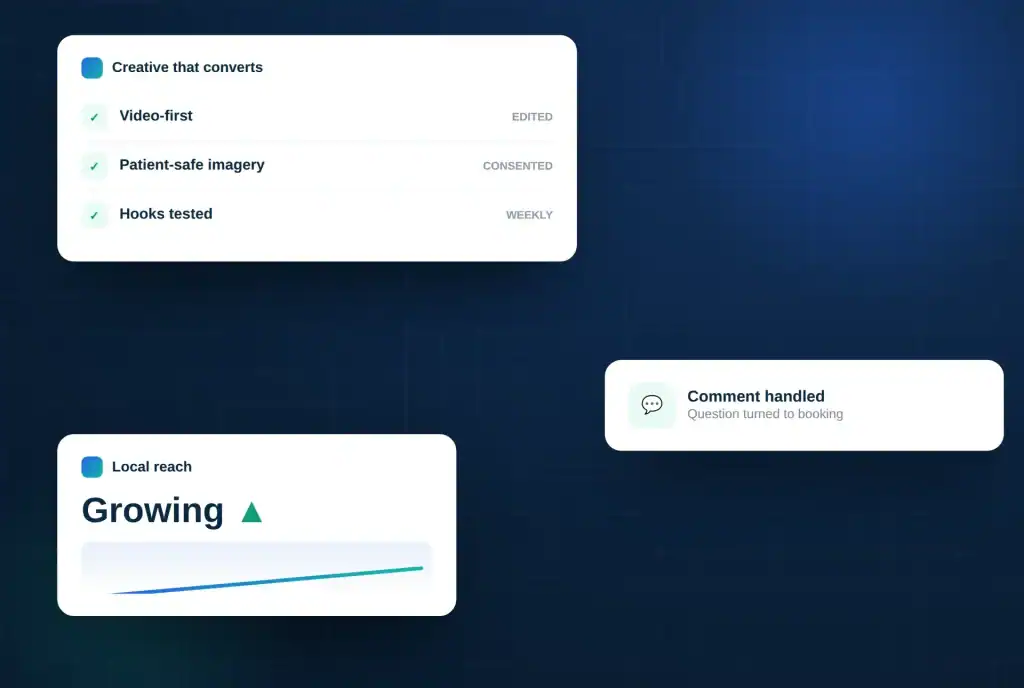
- Creative that shows the practiceVideo, team photos and patient-friendly offers built for the feed.
- Lead formsInstant forms or landing pages collect the request without leaving the app.
- Health rules built inNo condition targeting, no implied conditions, and compliant before-and-after use.
How Meta handles health advertisers
Meta tightened its rules for health and wellness advertisers in 2025. Campaigns that ignore them get rejected or stop learning.
No condition-based audiences
- Audiences by location, age and broad interests
- No custom audiences built from patient lists without consent
- Ads cannot say or imply that the viewer has a condition
Limited conversion events
- Since January 2025 many US health advertisers cannot optimize to lower-funnel events
- We optimize to leads and landing page views instead
- Booked visits are matched in our reporting
Claims and images
- No unproven treatment claims
- Before-and-after images follow Meta rules
- Weight-loss and cosmetic ads have extra limits
What's included
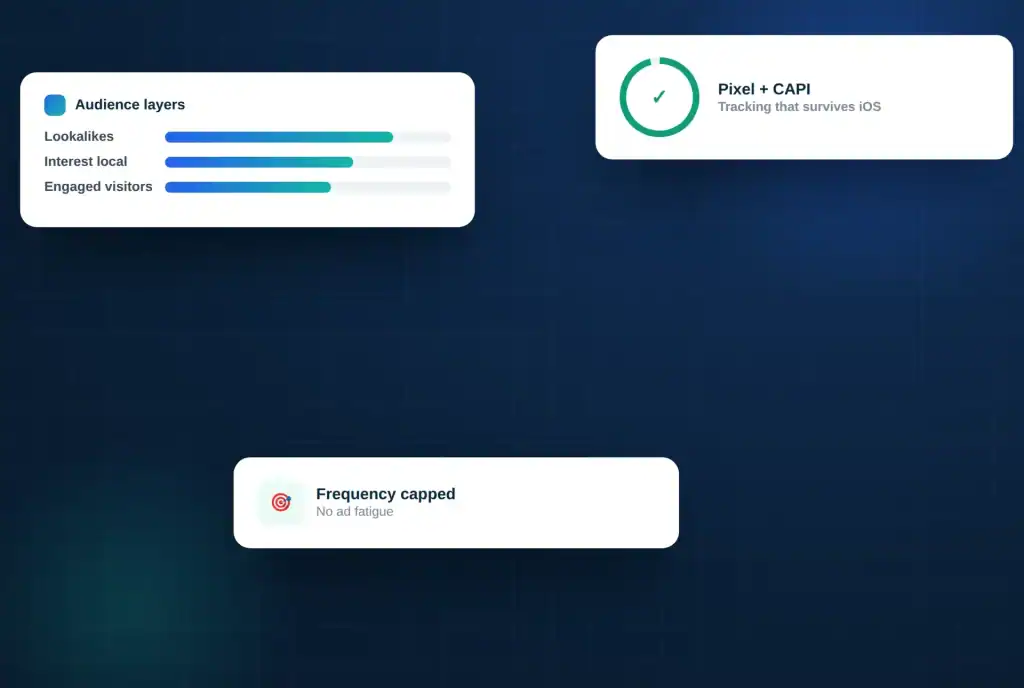
Location and age ranges around each office, built inside Meta health rules.
Video, image and carousel ads made for the feed, with offers patients understand.
Instant forms or landing pages, with fast follow-up by your front desk.
Server-side events without patient details, and no pixels on intake forms.
New ads tested every month so results do not fade.
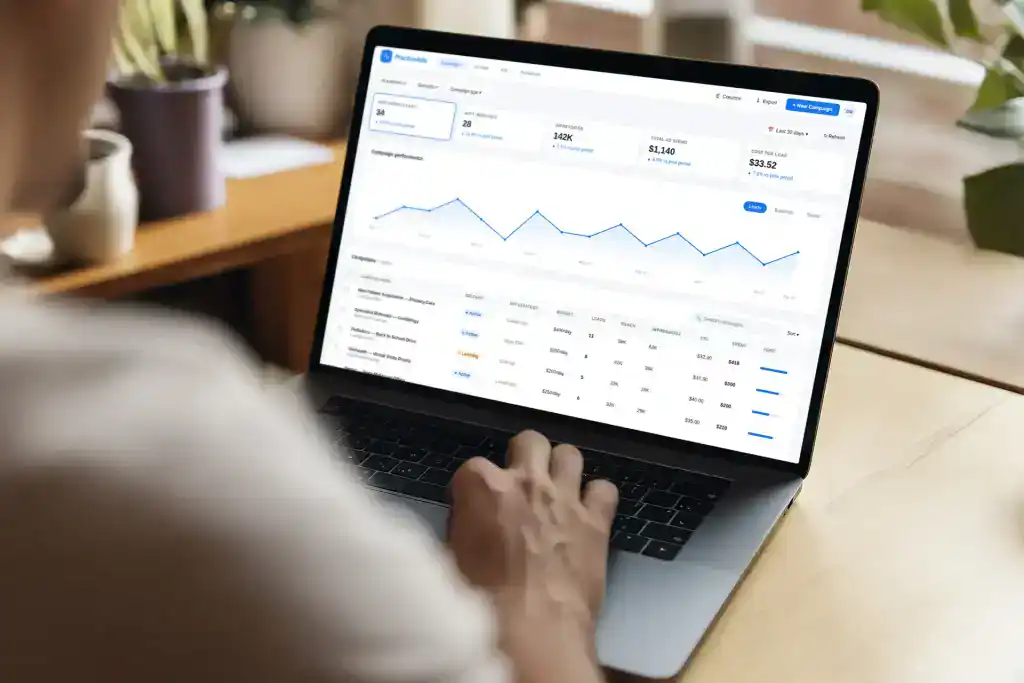
Spend, leads, calls, booked visits and cost per lead.
How we run your Facebook and Instagram ads
- 01Pick the offer
We choose the services and offers that work for people who are not searching yet.
- 02Make the creative
Short video, images and copy written for Meta health rules.
- 03Launch with tracking
Lead forms or landing pages, call tracking and HIPAA-safe events go live together.
- 04Follow up fast
Leads reach your team right away, because speed of reply decides how many book.
- 05Test and refresh
New creative and audiences are tested monthly and budget follows booked visits.
Across Meta apps
Placements
- Facebook feed
- Instagram feed
- Stories
- Reels
Formats
- Video
- Image
- Carousel
- Instant forms
Lead forms vs. landing pages
Instant lead forms
Landing pages
We usually test both and keep the one with the lower cost per booked patient.
Paid ads for your specialty
Pick your practice type: what a lead typically costs, where we run your ads, the rules that apply, and your free ads audit.
What a lead typically costs
- Google cost per click
- $8.00
- Google conversion rate
- 10.67%
- Google cost per lead
- $72.97
- Facebook cost per lead
- $61.56
LocaliQ 2026 benchmarks, “Dentists & Dental Services” averages. Your market will differ.
Where we run your ads
- Google Search
- Local Services Ads (dentist, orthodontist)
- Performance Max
- Facebook and Instagram
Implants, Invisalign and emergency visits carry the highest case value, so they get budget first.
What a lead typically costs
- Google cost per click
- $4.76
- Google conversion rate
- 12.43%
- Google cost per lead
- $40.04
- Facebook cost per lead
- $32.14
LocaliQ 2026 benchmarks, “Physicians & Surgeons” averages. Your market will differ.
Where we run your ads
- Google Search
- Local Services Ads where your specialty is listed
- Facebook and Instagram (broad audiences only)
Google limits personalized ads for health conditions, so campaigns target searches and locations, not diagnoses.
What a lead typically costs
- Google cost per click
- $4.76
- Google conversion rate
- 12.43%
- Google cost per lead
- $40.04
- Facebook cost per lead
- $32.14
LocaliQ 2026 benchmarks, “Physicians & Surgeons” averages. Your market will differ.
Where we run your ads
- Google Search
- Local Services Ads (optometrist, ophthalmologist)
- Performance Max for eyewear
- Facebook and Instagram
LASIK and specialty contacts run as separate campaigns from routine eye exams.
What a lead typically costs
- Google cost per click
- $4.06
- Google conversion rate
- 16.22%
- Google cost per lead
- $31.50
LocaliQ 2026 benchmarks, “Animals & Pets” averages. Your market will differ.
Where we run your ads
- Google Search
- Local Services Ads (veterinarian)
- Facebook and Instagram
Pet owner ads are not health ads for people, so fewer audience limits apply.
What a lead typically costs
- Google cost per click
- $6.17
- Google conversion rate
- 6.94%
- Google cost per lead
- $67.36
- Facebook cost per lead
- $27.11
LocaliQ 2026 benchmarks, “Health & Fitness” averages. Your market will differ.
Where we run your ads
- Google Search
- Local Services Ads (chiropractor, physical therapist, occupational therapist)
- Facebook and Instagram
Ads avoid cure claims and before-and-after language that Google and Meta reject.
What a lead typically costs
- Google cost per click
- $6.17
- Google conversion rate
- 6.94%
- Google cost per lead
- $67.36
- Facebook cost per lead
- $27.11
LocaliQ 2026 benchmarks, “Health & Fitness” averages. Your market will differ.
Where we run your ads
- Google Search
- Facebook and Instagram (no condition targeting)
Addiction treatment ads need LegitScript certification before Google will run them, and mental health conditions cannot be used for targeting.
What a lead typically costs
- Google cost per click
- $4.76
- Google conversion rate
- 12.43%
- Google cost per lead
- $40.04
- Facebook cost per lead
- $32.14
LocaliQ 2026 benchmarks, “Physicians & Surgeons” averages. Your market will differ.
Where we run your ads
- Google Search
- Local Services Ads (audiologist)
- Facebook and Instagram
Hearing aid ads follow FDA over-the-counter rules, so claims stay on fitting, testing and service.
What a lead typically costs
- Google cost per click
- $4.62
- Google conversion rate
- 10.35%
- Google cost per lead
- $39.25
- Facebook cost per lead
- $50.91
LocaliQ 2026 benchmarks, “Beauty & Personal Care” averages. Your market will differ.
Where we run your ads
- Google Search
- Local Services Ads (plastic surgeon, dermatologist)
- Instagram and Facebook
- Retargeting for consult no-shows
No claims for unproven or cell-based therapies, and before-and-after images follow Meta's rules.
Facebook and Instagram ads questions
Do Facebook ads work for medical and dental practices?
Yes, especially for elective care, new-patient offers and new locations. LocaliQ’s 2026 averages put Facebook cost per lead at $32.14 for physicians and surgeons and $61.56 for dentists.
What changed for health advertisers on Meta?
Since January 2025, Meta limits many US health and wellness advertisers from optimizing to lower-funnel conversion events and from sharing certain data. We optimize to leads and landing page views and match booked visits in our own reporting.
Can we target people with a specific condition?
No. Meta does not allow targeting by health condition, and ads cannot imply the viewer has one. We target by location and age and let the offer bring the right people in.
Can we upload our patient list for targeting?
Only with care. Patient lists are protected health information, so we do not upload them to Meta unless HIPAA requirements, including patient authorization where needed, are met.
How fast should we reply to leads?
As fast as possible. Leads cool off within minutes, so we route them straight to your front desk and track which ones book.
Is ad tracking HIPAA-safe?
It can be, if it is set up carefully. We keep advertising pixels off patient portals, intake and appointment forms, send conversions server-side without names, emails or health details, and count calls and form leads without passing what the patient said or typed to Google or Meta. HHS guidance on tracking technologies is the reference we follow.